Gas Line Replacement in Georgetown
Every gas system eventually reaches the day when patching stops making sense. In Georgetown, that day arrives most often in the older neighborhoods — Old Town, San Gabriel, the streets around the square — where black steel piping installed in the 1960s and 70s has spent half a century in Williamson County soil. Replacement is the honest answer to systemic age: instead of repairing the third leak on a line that will produce a fourth, we retire the old system and install a new one — sized for your home as it exists today, routed for the house you are building toward, tested to code, and documented for the decades ahead.
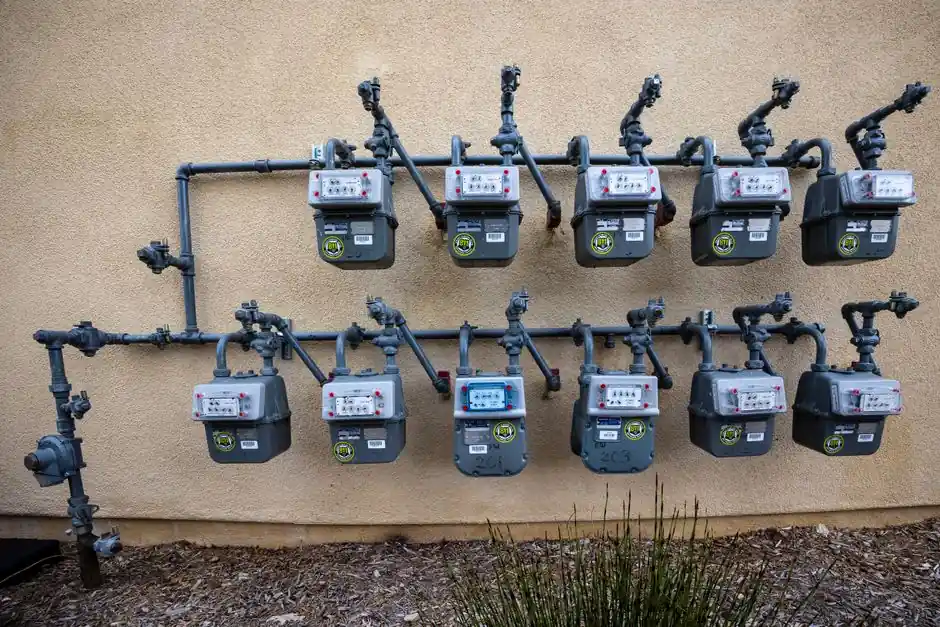
Service overview
Retiring Pipe That Has Earned Its Rest
A gas line replacement is exactly what it sounds like: the old piping comes out of service and new piping goes in, from the meter to the appliances, as a single engineered project. Unlike a repair — which fixes a point of failure — a replacement renews the system. New material, current joining methods, correct sizing from measured loads, accessible shutoffs, proper bonding, and a documented pressure test at the end. The result is not a patched old system but a new system that happens to live in an older house.
The decision usually builds over time. First one leak, repaired. Then another, eighteen months later, three joints down the same run. Then the technician's quiet observation that the pipe wall is thinning along the whole exposed section. At some point the arithmetic becomes obvious: each repair costs a service call, each leaves the remaining old pipe in place, and the total spent patching over five years approaches the cost of replacing once. Replacement is what you do when the system, not the joint, is the problem.
! Signs the System Is Done Being Patched
Leaks that keep moving down the line
One leak is an incident; two leaks on the same run within a couple of years is a pattern; three is a verdict. When failures migrate along a pipe — this joint this year, that joint next year — the pipe wall itself is deteriorating, and each repair only addresses the spot that failed first. Replacement stops the migration by removing the aging pipe entirely.
Corrosion you can see and measure
Flaking rust, pitting, and visible wall thinning on exposed steel are the system's way of showing its age. Surface discoloration on protected interior pipe may be cosmetic, but deep pitting and scale on exposed runs — especially at the meter riser and foundation penetrations — mean the metal is losing the battle. When a technician can measure meaningful wall loss, patching buys time; replacement buys decades.
Appliances that never get enough gas
A system sized for 1975 cannot always feed 2026. When burners run lazy, tankless heaters underperform, and the furnace struggles on cold nights — and the pipe is original — the issue is often undersized or restricted legacy piping, not the appliances. Replacement is the moment to size correctly: measured BTU loads, proper diameters, and capacity for the appliances you plan to add, not just the ones you have.
Scope of work
What a Full Replacement Includes
Our replacement service is a complete system renewal: assessment of the existing system and measured load calculations, design of the new routing and sizing, permitting through the local authority, installation of the new piping — underground PE service lines, interior steel or CSST distribution — new shutoffs and appliance connections, pressure testing to code with documentation, inspection coordination, and restoration of disturbed areas.
-
01
We handle the transition as a single managed project: the old system stays in service until the new one is tested and approved, then the cutover happens in a planned window — usually a single day — with appliances reconnected, relit, and verified. You are not left choosing between heat and construction; the plan keeps you whole throughout.
Assessment first, always
-
02
Permit-ready planning
Every replacement starts with a survey: the existing system's material, routing, and condition; the BTU load of every connected appliance plus planned additions; the routing options for new pipe through your house and yard; soil and access conditions for underground work. The design that emerges is specific to your property — not a generic repipe, but your repipe.
-
03
The load calculation is the engineering heart of the project. We measure the demand — every appliance's input rating, the longest run's pressure drop, the meter's capacity — and size the new piping from tables, not habits. A replacement sized for today's loads plus reasonable growth is a system that will not starve the next appliance you add.
New pipe, new connections, proven tight
-
04
Installation follows the design: underground sections in PE with tracer wire and proper bedding, interior distribution in steel or CSST to current code, new accessible shutoffs at every appliance, sediment traps where required, bonding and grounding to standard. Every joint is then proven — pressure testing to code, leak solution on connections, electronic verification — before the system goes live.
Why Replacement Beats Perpetual Repair
The math favors replacement once a system shows systemic age: the cumulative cost of repeated repairs, the disruption of repeated service calls, the risk carried between failures, and the energy waste of a deteriorating system. Against that, a replacement is one project, one disruption, one inspection — and then decades of a system built to current code with documented test results. Homeowners who have lived through three patch repairs understand this arithmetic intimately; our job is to present it honestly before the fourth.
Sizing Charts, Gauges, and Threading Gear
Contact us nowLoad calculation tables
Pipe sizing starts on paper: appliance BTU schedules, longest-run measurements, pressure-drop calculations from fuel gas code tables. The tables translate your home's actual demand into pipe diameters — the engineering basis the whole project stands on, documented in your project file.
Calibrated pressure gauges
The new system is proven with calibrated test gauges at code-specified pressures — the same discipline as standalone pressure testing, applied to the entire renewal. The documented pass is your proof and your inspector's requirement, produced as a matter of procedure.
Electronic leak verification
After the pressure test, every accessible joint gets the electronic sweep and the bubble test — two methods confirming what the gauge reported. New systems should be perfect; we verify that they are.
Threading and joining equipment
Where the design calls for threaded steel, power threading equipment cuts clean, precise threads on site — because replacement often means custom lengths fitted to your house's actual geometry. CSST and PE sections are joined with manufacturer-specific tools and fittings, each installed to spec and inspected.
Replacement routing in Georgetown respects what the town is built on: Blackland clay that moves, limestone that resists, and houses that have been finished and refinished around their old pipe. We route new lines for accessibility and protection — through attics and crawlspaces where practical, underground in PE where the run demands it — always with an eye toward the next technician who will service the system decades from now.
Local execution
For many Georgetown homes, replacement is also the moment the system's archaeology gets resolved: the undocumented 1980s branch, the abandoned capped line nobody can explain, the routing that made sense to someone in 1974. The new system is mapped, labeled, and documented — a clean record replacing a mystery.
Before & after
Neighborhoods we serve around Georgetown
- • Williams Drive
- • Berry Creek
- • Copper Ridge
- • Downtown Georgetown
- • Downtown Georgetown area
From Failing to Renewed
The Repair-vs-Replace Decision, Made Honestly
Here is the framework we use with homeowners, because the decision deserves better than a sales pitch. Repair when the failure is isolated and the surrounding pipe is sound — one bad joint, one damaged section, one failed valve — and the system's overall condition supports continued service. A targeted repair on a fundamentally healthy system is the right call, and we will tell you when it is.
Replace when the pattern says the system is aging out: recurring leaks at different locations, widespread corrosion or measurable wall thinning, materials the code has left behind (bare steel underground, old copper, unbonded early CSST), or chronic undersizing that starves modern appliances. Also replace when a renovation opens the relevant walls — the marginal cost of new pipe inside open construction is a fraction of a standalone project.
The tiebreaker question we ask every homeowner: "If we repair this leak today, how confident are you that we won't be back within two years for the next one?" When the honest answer is "not confident," replacement is the economical choice — not because repairs are bad, but because this system has stopped rewarding them.
Timing matters too. A planned replacement — scheduled in mild weather, sequenced around your calendar, with materials on hand — costs less in every way than an emergency repipe forced by a failure. If your system is showing systemic age, the cheapest replacement is the one you schedule before the system schedules it for you.
- ▸ Recurring leaks at different locations signal systemic deterioration, not bad luck.
- ▸ Widespread corrosion and measurable wall thinning mean the pipe's service life is ending.
- ▸ Undersized legacy piping starves modern appliances — replacement sizes for today's loads.
- ▸ A planned replacement costs less in every way than an emergency repipe.
Planning Your Replacement
One Project, Decades of Certainty
A replacement is a significant project and deserves significant planning. We start with the assessment and load math, design the routing around your house and yard as they actually are, handle permitting and inspection scheduling, and execute on a timeline built around your household — including the cutover plan that keeps you in service throughout. Most residential replacements complete in days, not weeks, with the gas off only during the planned cutover window.
The planning conversation also covers the future: the generator you are considering, the pool heater on the five-year plan, the outdoor kitchen sketched on a napkin. Sizing the new system for the house you are building toward costs little extra now and avoids a second gas project later. Tell us the plan; we will engineer for it.
The Replacement Process, Step by Step
Survey and engineering
We map the existing system, measure every appliance load, evaluate routing options, check soil and access conditions, and produce the design: materials, diameters, routing, isolation plan, and cutover sequence. You approve a specific plan, not a vague proposal.
Permitting and preparation
Permits are pulled, materials are staged, and the work areas are prepared — protection for floors and landscaping, access opened where needed. The old system remains live; nothing is disrupted before its replacement is ready.
New system installation
The new piping goes in per the design: underground PE with tracer wire and proper bedding, interior distribution to code, new shutoffs and connections at every appliance. Each section is installed, supported, and protected to the standard the next inspector — and the next decade — will expect.
Cutover, testing, restoration
The old system is isolated and the new one is pressure-tested to code with documented results. Then the cutover: appliances reconnected, pilots relit, every burner verified. Inspection is coordinated, and disturbed areas — drywall, sod, concrete — are restored. You receive the documentation file: design, test records, inspection sign-offs, and the as-built map of your new system.
What Shapes a Replacement Project
Replacement scope varies widely because houses vary widely. The honest cost drivers:
Length, routing, and obstacles
Longer runs and difficult routing — through finished walls, across attics, under concrete — add labor at every stage. Straightforward accessible runs keep the project simple; houses that have been finished around their old pipe three times do not.
Appliance count and demand
Each appliance means a branch line, its own shutoff, and proper connection — and high-demand appliances like tankless heaters or pool equipment drive larger diameters. The appliance schedule is the second axis of the project's scale, after footage.
Underground conditions
Buried sections mean trenching through Georgetown's soils — Blackland clay that grips and shifts, limestone that resists cutting. Rocky ground and deep settlement change the excavation portion significantly, which is why the assessment prices the ground, not just the pipe.
Why Homeowners Plan With Us
Replacement deserves engineering, not improvisation. We size from measured loads, build to current fuel gas code throughout, pressure-test with documentation, coordinate inspections, and restore your property — one accountable contractor for the whole renewal. When the project is done, you hold a file that proves what was installed, how it was tested, and that it passed.
Call (512) 778-8549Frequently asked questions
How do I know whether I need replacement instead of repair?
The pattern decides. Repair when the failure is isolated and the surrounding pipe is sound — one bad joint, one damaged section. Replace when leaks recur at different locations, corrosion is widespread or measurable, the material is one the code has left behind, or the system chronically undersizes your appliances. Our assessment gives you the honest read: we'll recommend repair when repair is right, because a trustworthy replacement contractor is one who doesn't replace unnecessarily.
Will my home be without gas during the replacement?
Only during the planned cutover window — typically part of a single day. The old system stays live while the new one is installed and tested; then we isolate the old, connect the new, relight appliances, and verify every burner. The schedule is designed around your household, and you'll know the exact window in advance. Most families experience it as a single day of coordinated work, not a week of camping.
What pipe materials do you use for replacement in Georgetown?
Underground service lines go in as polyethylene (PE) — corrosion-proof, fusion-joined, with tracer wire — which is the modern standard. Interior distribution is typically black steel or CSST, each to current code with proper bonding, supports, and protection. Material choice follows the application and the code, not habit: the right pipe in the right place, joined by the right method, every time.
Does a gas line replacement require a permit in Georgetown?
Yes — gas piping work requires permits and inspections through the local authority, and a full replacement certainly qualifies. We handle the permitting, schedule the inspections (including witnessed pressure tests where required), and deliver the sign-offs in your documentation file. Unpermitted gas work can void insurance coverage and becomes a disclosure problem at sale; permitted work protects you on both counts.
Can the new line take a different route than the old one?
Often yes, and often it should. The old route was chosen for a different house — before the addition, before the patio, before the oak matured. Replacement is the opportunity to route for the current property: more accessible runs, better protection, cleaner penetrations, room for future appliances. The design phase evaluates routing options against your house and yard as they exist today, not as they were in 1974.
How long does a gas line replacement take?
Most residential replacements complete in a few days of on-site work: assessment and design, permitting, installation, testing, cutover, inspection, and restoration. The gas is off only during the planned cutover window. Larger or more complex projects — long underground runs through rock, extensive interior routing through finished spaces — take longer, and we'll give you an honest timeline at the design stage, not a hopeful one.
Should I replace the line if I'm adding new gas appliances?
If the existing system is aging or undersized, combining the addition with a replacement is usually the smart move — one project, one permit, one inspection, and a system sized for everything including the new load. At minimum, get the load calculation done: it will tell you definitively whether the old piping can support the new appliances or whether the addition is the trigger the replacement was waiting for.
Related services
Stop Patching. Start New in Georgetown
If your gas line has become a repeat customer, call us to plan its retirement. One engineered replacement, sized for your home's present and future, tested and documented — and then decades of not thinking about it.