Gas Line Repair in Georgetown
Gas line repair is surgery, not demolition: the art of fixing exactly what failed, in a system that is otherwise worth keeping, without disturbing what still works. In Georgetown — where the gas piping in older neighborhoods has been assembled across decades, threaded joint by threaded joint — most repairs are acts of precision. A weeping joint behind the water heater. A seized valve at the manifold. A corroded section of the buried service line. We diagnose the failure, isolate it, repair it to code, and prove it with testing — leaving the sound pipe alone and your home whole.
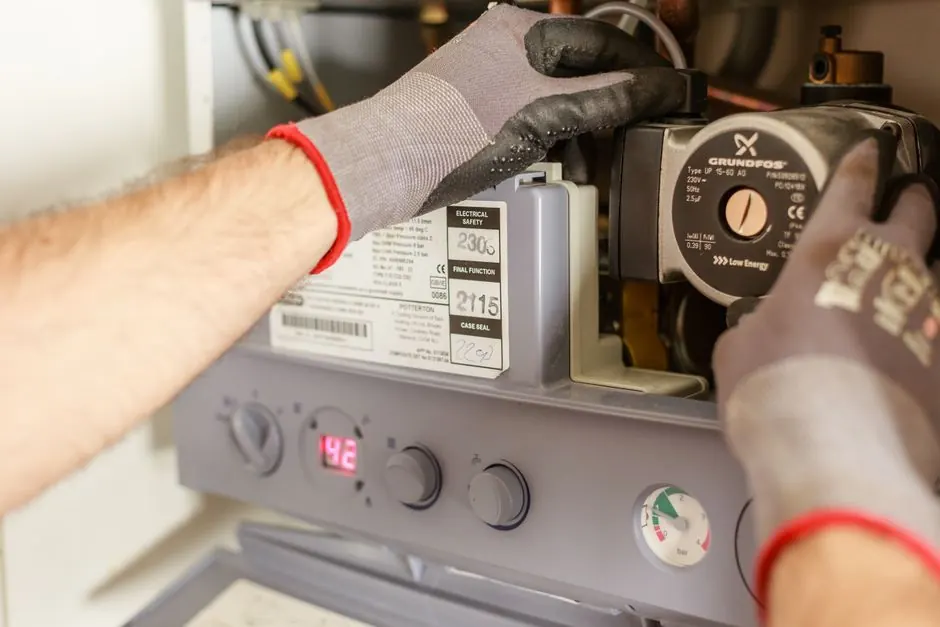
Service overview
Surgical Repair for Systems Worth Saving
The first decision in any repair is whether the system deserves one. A single failed joint in otherwise sound piping? Repair it — the system has decades left. A valve frozen since the house was built? Replace the valve. But three leaks in two years on the same run, or corrosion you can measure with a thumbnail? That is a system telling you it is done being repaired, and the honest recommendation becomes replacement. We make that call with you, not for you — because the right answer depends on the pipe's condition, your plans for the house, and the math, and all three deserve daylight. Most of our repair visits end with a repair. Some end with a frank conversation. Both are the job done right.
! The Failures We See Most
Joints giving up after decades
Threaded joints are the most common failure point in Georgetown's older gas systems — not because they were badly made, but because fifty years of thermal cycling, soil movement, and vibration eventually loosen what was once tight. The leak is usually small: a weep you smell before you see, at a joint that looks fine until the detector says otherwise. Repair means disassembling, cleaning, resealing with proper compounds, reassembling to torque, and testing — the joint comes back better than it was.
Valves that cannot do their job
A shutoff valve has one job — to close, completely, when needed — and decades of disuse cause many to fail at it. They seize so they cannot be turned, or they turn but weep at the stem, or they close most of the way and no further. A valve that cannot isolate its section is not a safety device; it is a decoration. We replace failed valves with proper quarter-turn ball valves, positioned for actual emergencies, and we test them through full cycles before we leave.
The previous owner's improvisation
Every older Georgetown neighborhood has houses carrying the last owner's gas work: the unpermitted branch run in the wrong material, the mismatched fittings, the connector old enough to vote, the line routed where no line should go. This work often "works" for years — until it doesn't. Repairing around improvisation means bringing the affected section up to code, not just making the symptom stop. We fix it properly, document it, and give you a system you can stop wondering about.
Scope of work
What a Repair Visit Covers
Our repair service covers the complete arc: locating the failure with electronic instruments and pressure diagnostics, isolating the affected section safely, removing the failed joint, valve, or pipe section, installing the repair with code-recognized materials and methods, and proving the work with pressure testing and leak verification. You get the diagnosis, the repair, and the proof — in that order.
-
01
Thorough Inspection
Location comes first and determines everything else. We sweep all accessible piping with combustible-gas indicators, check every valve and appliance connection, and use pressure testing on isolated sections when the failure hides in concealed or buried pipe. The goal is certainty about what failed before anything is disassembled — because the most expensive repair is the one that fixes the wrong thing.
-
02
Targeted joint and section repair
Once pinpointed, the failed joint or section is isolated and depressurized, removed, and replaced — new fittings, proper thread sealant, correct torque, and materials matched to the system. The repair integrates with the existing pipe; it does not fight it. Then the section is pressure-tested independently before the system returns to service.
-
03
Valve Replacement
Valve replacement and restoration
-
04
Compliance Checks
Failed valves are replaced with full-port quarter-turn ball valves — at appliances, manifolds, and the service entry as needed — each positioned for reachability in a real emergency and labeled so the next person knows what it controls. Every new valve is cycled several times and leak-checked; a valve is only done when it has proven it can do its one job.
Code-correct completion
Every repair is completed to the fuel gas code as Georgetown inspectors enforce it, and we flag anything else we find that the code would not accept — because a repair visit is also an inspection, and silence about a hazard we noticed would be its own failure. The system you get back is not just fixed; it is defensible.
Contact us nowInstruments That Find the Truth
Electronic leak detector
Handheld combustible-gas indicators sweep every joint, valve, and connector, reading concentrations far below the human nose's threshold. The sweep is methodical — every accessible connection, documented — because the leak that gets missed is the one nobody looked at twice.
Pipe Wrench
Proper wrenches, proper torque
Pressure Gauge
Threaded black-iron connections are made and broken with correctly sized wrenches — no rounding, no scarring, no stressed fittings. Assembly torque matters: under-tightened joints weep, over-tightened ones crack. The right tools make the difference between a repair and a future leak.
Soldering Torch
Gauges before, during, after
Local execution
Pressure gauges verify the system's state at every stage: baseline before work, the isolated section during repair, and the standing test after. In Georgetown's housing stock — where a repair often touches piping installed across multiple eras — that verification is what turns a good repair into a proven one.
How Gas Line Repair works in Georgetown
- • Williams Drive
- • Berry Creek
- • Downtown Georgetown area
- • Historic downtown
Repair here means knowing the ground and the houses: Blackland clay that shifts buried lines, limestone that complicates every trench, historic-district homes where the gas routing predates the renovation around it, and Sun City properties where the systems are newer but the expectations are higher. We have repaired gas lines in all of it, and the common thread is method — locate precisely, isolate safely, repair to code, prove with instruments.
Repairs, Day and Night
When a repair can't wait
Gas problems do not observe business hours, and neither do we. A suspected leak gets priority response around the clock — because the difference between a weep and an emergency is often just time. When you call with an odor, a hiss, or a red tag, we treat it as urgent until instruments prove otherwise, and the repair follows the diagnosis as fast as safety allows.
What Happens on a Repair Visit
Initial Inspection
We start with the instrument sweep — every accessible joint, valve, regulator, and appliance connection — plus your observations about when and where the problem appears. Patterns in your story often aim the instruments: the smell that's worse in the morning, the appliance that started acting up after the yard work.
Diagnosis
With the failure located, we show you what failed and why, lay out the repair options honestly — including when replacement would serve you better — and quote the work precisely. No work begins until you understand what is wrong, what we will do, and what it costs. Surprises are for birthdays, not gas repairs.
Repair Plan
Then the repair itself: isolate and depressurize the section, remove the failed component, install the new work to code, and prove it — pressure test, electronic sweep, solution check. The system returns to service only when the instruments agree it should. You get the documentation of what was done and what was verified.
What Repair Work Depends On
Honest repair pricing follows the job's physical facts, not a menu. A single accessible joint and a buried service line are different universes of work, and the estimate should reflect which universe you are in. The factors that shape it:
How much pipe is involved
A single failed fitting is a contained job; a corroded section spanning several feet means cutting out pipe, fitting new sections, and more extensive testing. The footage and the number of joints set the baseline.
Materials Used
What the system is made of
Labor Complexity
Black iron, CSST, and copper each demand different methods, materials, and time — and repairs must match the existing system. The material also predicts the future: some repairs are worth doing once, others signal a system ready for replacement.
Before You Schedule
Frequently asked questions
How do I know if my gas line needs repair or replacement?
The pattern tells the story. A single failed joint, one bad valve, or one damaged section in an otherwise sound system calls for repair. Recurring leaks at different locations, widespread corrosion, or materials the code has left behind call for replacement. Our diagnosis gives you the honest read — we'll recommend the repair when the system deserves one, and we'll tell you plainly when patching has stopped making sense.
What does gas line repair typically involve?
Locate, isolate, repair, prove. We find the failure with electronic instruments and pressure diagnostics, isolate and depressurize the affected section, remove the failed joint, valve, or pipe segment, install the repair with code-recognized materials and methods, then pressure-test and leak-check the work. You receive documentation of what was done and what the testing proved — the repair isn't finished until the instruments agree.
Can you repair a gas leak the same day I call?
Suspected leaks get priority response — we treat every odor or hiss report as urgent until instruments say otherwise. Most repairs complete in the same visit once diagnosed: isolating a section, replacing a joint or valve, and testing typically takes hours, not days. Larger repairs involving buried pipe or extensive corrosion take longer, and we'll tell you the honest timeline at diagnosis, not a hopeful one.
Is it safe to stay in the house during a gas line repair?
During diagnosis of a suspected leak, we may ask everyone to wait outside until the situation is assessed — safety first, always. For planned repairs with no active leak, staying home is usually fine; the affected section is isolated and depressurized while the rest of the house goes about its day. We'll tell you exactly what to expect before work begins, including the brief window when the gas is off.
Will the repair require opening walls or digging?
Only as much as the failure demands. Accessible joints and valves repair without demolition; concealed failures sometimes require small, surgical openings — which we keep minimal and restore. Buried line failures need excavation, and we'll show you exactly where and why before digging. Precision locating is the whole point: we open what the instruments indict, nothing more.
Do you guarantee your gas line repairs?
Our workmanship is warranted in writing — if our repair fails due to our work, we make it right. Beyond that, every repair includes documented pressure testing, which is the strongest guarantee the trade offers: proof, on paper, that the repaired section holds. A repair backed by test records is a repair you never have to wonder about.
Fix It Right, Right Now
A gas problem doesn't improve with waiting. Call for repair in Georgetown — diagnosis with instruments, repair to code, and proof before we leave. Your system will be fixed, verified, and documented.