Gas Line Repair in Williams Drive, Georgetown, TX
Williams Drive is one of Georgetown's established family corridors — subdivisions of 1990s to 2010s homes where kids grew up, pools went in, and gas systems quietly accumulated birthdays. These are the neighborhoods where the original water heater is on its second replacement, the pool heater has been upsized once, and the gas piping has spent 15 to 35 years doing its job without complaint. Our work here is the mid-life specialty: inspections that catch age before it becomes failure, pool heater gas lines engineered for real loads, and repairs that respect a system with plenty of life left.
About This Area
Why Gas Line Work in Williams Drive Is About Timing
Why we serve here
Williams Drive's subdivisions were built across the 1990s, 2000s, and 2010s — and that era's gas work has a specific personality. Corrugated stainless steel tubing (the yellow flexible pipe) runs through many of these homes, original shutoff valves are reaching the age where they seize, and buried steel sections have had two to three decades of clay-soil contact.
Gas line care for mid-age homes, growing families, and backyard living.
This is a family area: backyard pools, outdoor kitchens added over the years, the slow accumulation of gas appliances as households grew. Every addition asked a little more of the original piping — and the original piping was sized for the house as built, not as it became.
That accumulation is the story of gas work on Williams Drive. Not crisis, mostly — maintenance. The valve that won't turn when you need it, the pool heater starved by an undersized original run, the CSST that needs bonding verification. Catch these in their mid-life window and the system serves for decades more.
Pool heaters are the defining gas appliance of Williams Drive. A single pool heater can demand 200,000 to 400,000 BTU — more than the furnace, water heater, and range combined — and many were connected to whatever capacity happened to be nearby when the pool went in. We see the results: heaters that never quite reach temperature, soot from starved burners, systems running at their ragged edge.
Then there are the additions. Fifteen to thirty years of family life means the built-in grill station, the fire pit, the outdoor kitchen, the guest-house conversion — each tapped into the existing system, each one more straw on the original pipe's back. At some point the math stops working, and the honest answer is a capacity upgrade, not another branch.
Our work on Williams Drive covers the full arc: electronic leak detection for the phantom odor, pressure testing that proves a mid-age system tight, CSST bonding verification, pool heater gas lines sized from real BTU math, valve replacements before the seized valve becomes the emergency, and full inspections that map a 25-year-old system honestly.
Services available
Gas Services on Williams Drive
Mid-age homes need a particular kind of gas work — inspections that find what's aging, repairs that fix what's failed, and capacity upgrades that match the house as it lives today. Every service below is work we do on this corridor regularly.
Gas Line Repair
Repair on Williams Drive usually starts with age showing: a corroded section of buried steel, a weeping joint at the meter, a valve that finally gave up. We locate the failure with instruments, repair it with the correct materials, and pressure-test before the gas returns — the surgical fix for a system with life left.
Gas Line Installation
New gas lines on Williams Drive usually serve the backyard: pool heaters, outdoor kitchens, fire features, workshop heaters. Every run starts with load math — the total demand against the meter's capacity — and ends with permitted, pressure-tested pipe at proper depth.
Gas Leak Detection
If you smell gas or suspect a leak, detection comes first — especially in a neighborhood where buried steel has had decades of soil contact. Electronic sweep of every accessible joint, pressure diagnostics for the buried and concealed sections, and a written report of exactly what was found.
How We Work on Williams Drive
The Method for Mid-Age Systems
Challenge: 15-to-35-year-old components reaching decision points
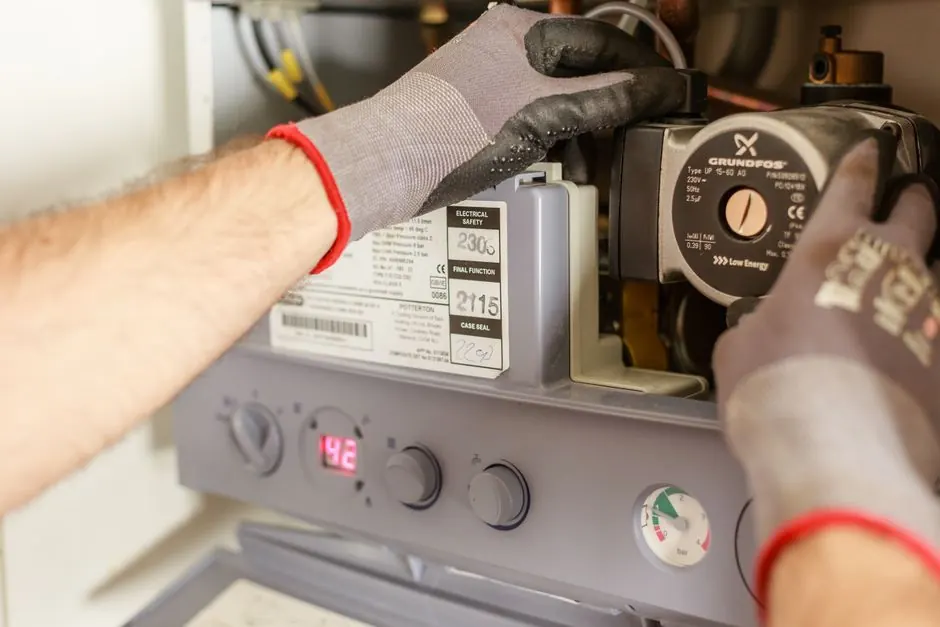
Williams Drive's gas systems have 15 to 35 years of service behind them. Buried steel shows its age first, then valves, then connectors. The question at every visit is the same: repair the component or renew the section? We answer it with measurements — wall condition, pressure behavior, the system's broader state — not with a sales quota.
Challenge: Big new loads on original piping
A pool heater can demand more gas than the rest of the house combined, and decades of piecemeal additions leave the original pipe undersized for the household it now serves. The symptom is usually subtle — the heater that underperforms, the range flame that dips when everything runs — until someone does the math.
Where We Work
Case files
Pool Heater Gas Lines, Done Right
A Williams Drive family was replacing an aging pool heater with a larger, more efficient model — and the installer flagged that the existing gas line looked undersized for the new unit's appetite.
We calculated the new heater's full-fire load against the home's total gas demand, confirmed the original run couldn't feed it, and ran a new dedicated line from the meter — sized for the heater plus headroom, at proper depth, with its own shutoff.
The new heater fires at full capacity, the pool heats on schedule, and the gas system passed pressure testing with room to spare. The family got the pool they paid for instead of a starved heater limping along.
Mid-Age Home Inspection
A homeowner in a late-1990s Williams Drive subdivision wanted a full picture of the gas system before a kitchen remodel added a professional range to the load.
Our inspection found a seized shutoff valve at the water heater, early corrosion on the meter assembly, CSST runs that needed bonding verification, and — critically — that the existing piping couldn't carry the new range plus everything else. All of it documented with photos.
The remodel is proceeding on a verified system: lines verified tight under pressure, bonding corrected, a capacity upgrade scoped for the new range. The kitchen gets its pro range; the gas system gets its clean bill of health.

Field Notes from Williams Drive
What 1990s–2010s Homes Teach About Gas
Williams Drive's homes sit in the sweet spot of gas line work: old enough to need attention, young enough to reward it. The patterns repeat across the subdivisions — CSST needing bonding checks, original valves seizing, pool heaters outgrowing their supply lines, buried steel showing its first corrosion. None of it is mysterious once you've seen the era's work a few dozen times; all of it is fixable when caught in the mid-life window. The homeowners who inspect every few years spend far less than the ones who wait for the failure.
Local questions
How often should Williams Drive homeowners inspect their gas lines?
For homes in the 15-to-35-year range, a professional gas line inspection every three to five years is the sweet spot — more often if you've added major gas appliances, if the home has original valves and connectors, or if you've ever smelled even a faint intermittent odor. The inspection maps the system's condition, verifies CSST bonding, checks valve function, and pressure-tests the whole. It's the cheapest way to own a mid-age gas system with confidence.
Can you run a gas line for a pool heater in Williams Drive?
Yes — it's one of our most common Williams Drive jobs. Pool heaters are among the highest-demand residential gas appliances, so the first step is always load math: the heater's BTU rating against the meter's capacity and the existing piping. Often the answer is a new dedicated run from the meter, sized for the heater with headroom. We permit it, install at proper depth, pressure-test, and coordinate the heater startup so you see it firing at full capacity.
What is CSST and why does it come up in 1990s–2000s homes?
CSST — corrugated stainless steel tubing — is the flexible yellow (sometimes black-jacketed) gas piping used extensively in homes built from the 1990s on. It's a legitimate, code-approved material when installed and bonded correctly. The "when" matters: CSST must be properly bonded to the electrical grounding system to protect against lightning-induced damage. Many Williams Drive homes have CSST that was never verified for bonding. Our inspections check it — and correcting bonding is usually straightforward.
What affects the cost of gas line repair on Williams Drive?
The failure's nature and location drive the price: an accessible valve replacement is a contained job; a buried steel section means excavation; a capacity upgrade for a pool heater means new pipe from the meter. The home's age matters too — mid-age systems sometimes reveal related issues (seized valves, early corrosion nearby) that are cheaper to address while we're there. We quote itemized and plainly before work begins, so you see exactly what drives your number.
My Williams Drive home has the yellow flexible gas pipe. Is it safe?
That yellow flexible pipe is CSST, and it's safe when correctly installed and properly bonded — it's been a standard gas piping material for decades. What we'd verify: that it's bonded to the grounding system, that runs are properly supported and protected from damage, and that connections are sound. An inspection answers all three definitively. If bonding is missing or deficient, we correct it — usually a straightforward job that meaningfully improves the system's safety.
How do I know if my gas line can handle a pool heater?
Pool heaters are among the highest-BTU residential appliances — often 200,000 to 400,000 BTU, more than everything else in the house combined. The test is arithmetic: add up every gas appliance's BTU rating, compare against the meter's capacity and the piping's delivery capability at your run lengths. If the math doesn't work, the heater starves — poor heating, soot, wasted gas. We do this calculation as standard practice before any pool heater gas line, and we'll show you the numbers.
What does a gas line inspection involve in a 1990s home?
We pressure-test the system to verify it's tight, sweep all accessible joints with electronic detection, check valve function (including the ones nobody's touched in twenty years), verify CSST bonding, assess visible piping and connectors for corrosion, and review the meter assembly. You get a written report with photos: what's sound, what's aging, what needs attention — prioritized honestly, priced plainly.
Workmanship & Safety
Trust and Compliance
With gas, there are no shortcuts worth taking. Every Williams Drive job starts from the same place: the system made safe, the work diagnosed with instruments, the repair or installation done to code, and the result proven with testing. We permit where required, call Texas 811 before digging, and document everything — because the paperwork is part of the safety, not bureaucracy.
Areas We Cover
Signs Your Williams Drive Home Needs Gas Line Attention
Mid-age gas systems usually give warning before they fail. Knowing the signs helps you call early, when the fix is small:
1. Gas odor near the meter, pool equipment, or indoors
Utilities add a rotten-egg scent to odorless natural gas so leaks are noticeable. If you catch it near the meter, around pool equipment, or inside the house — even faintly, even once — treat it as real. Leave the area and call 911, then call us for detection.
2. Hissing or whistling near the meter or valves
A faint hiss at a joint, valve, or meter connection can mean gas escaping under pressure. Don't try to locate it yourself — note where you heard it, leave the area, and let instruments do the finding.
3. Pool heater struggling or showing soot
A gas pool heater that won't reach temperature, cycles oddly, or shows soot around the burner is often starved for gas — the supply line can't deliver what the heater demands. It's a capacity problem, not a heater problem, and the fix is in the piping.
4. Higher gas bills with no change in usage
A gas bill that climbs while your routine stays the same can point to a slow leak or a connection working loose. In a mid-age system, it's worth a detection visit — the instruments will tell you in an hour what guessing can't.
5. Yellow, flickering, or sooty appliance flames
Look for a steady blue flame on every gas burner. Yellow tips, flickering, or soot around the burner suggest the appliance isn't getting clean, adequate gas — which can mean a supply issue upstream worth investigating.
6. Stiff valves or visible corrosion
A shutoff valve that won't turn, green or rust-colored corrosion on exposed piping, or flaking on the meter assembly — these are the visible birthdays of a mid-age system. None is an emergency by itself, but together they're the inspection reminder.
Gas Line Care for Williams Drive Homes
From mid-life inspections to pool heater gas lines, Williams Drive's established homes need the specialist's touch: diagnosis with instruments, honest assessments of aging systems, and capacity engineering for the way families actually live. Call us — we'll keep your mid-age system serving like it should.
Request service